


Why Your Washer Isn’t Spinning
A washer that won’t spin is more than a nuisance — it leaves loads soaked, invites mildew and odors, and can be the first sign of an electrical or mechanical problem that gets worse over time. This guide shows you how to tell the difference between simple user mistakes and real component failures, how to run safe checks at home, and when bringing in a pro is the fastest way to get reliable spinning back. You’ll learn the common causes — from unbalanced loads and faulty lid switches to clogged pumps, worn belts, motor or control faults, bearings, and power issues — plus a step-by-step troubleshooting path, brand-specific notes, cost guidance using a repair-vs-replace approach, preventive tips, and clear signals for calling a technician. If you’d rather have an expert check it, Serenity Appliance LLC diagnoses and washer repair for customers in Wesley Chapel, FL and across Florida; you can schedule service online for same-day or next-day visits when available. Read on for quick checks, diagnostic tables, and cost comparisons to help you act with confidence.
What Common Problems Keep a Washer from Spinning?
A washer that won’t start or finish a spin can be caused by user, drainage, mechanical, or electrical issues — identifying the category speeds up repair and lowers risk. The most common culprits are unbalanced or overloaded loads, a bad lid switch or door lock, clogged drain pumps or hoses, worn or broken drive belts, motor or coupling failures, control board or timer faults, worn bearings or suspension problems, and power supply issues. Each problem has telltale symptoms — for example, a drain problem usually prevents spin because the machine won’t advance until water is removed, while bad bearings often make a loud rumbling when the machine tries to spin. The diagnostic table below helps match symptoms to likely causes and indicates whether a quick DIY check might help or if a technician is the safer choice.
Different causes require different responses. The sections that follow explain how each issue stops the spin cycle, how to check it safely at home, and when to call a pro for repair or a part replacement.
How an Unbalanced or Overloaded Load Stops the Washer from Spinning
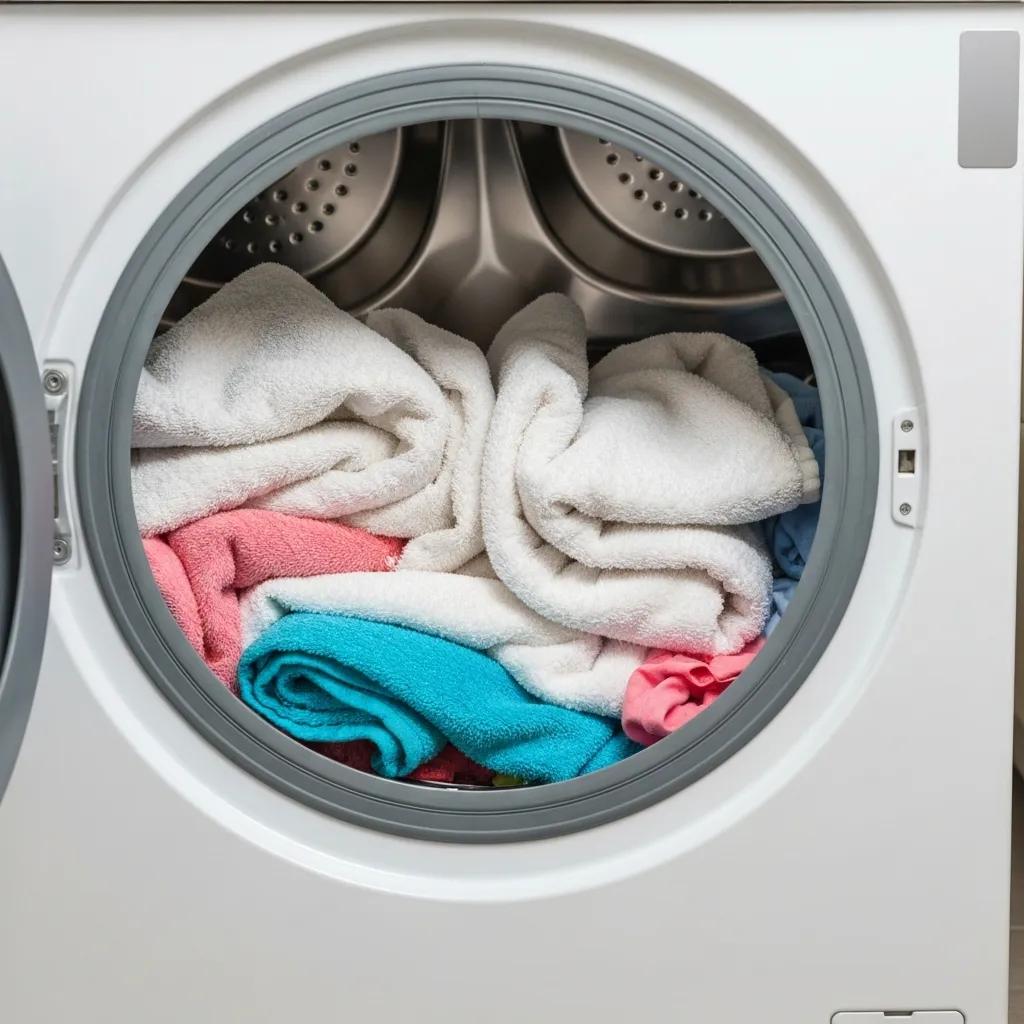
Most washers have imbalance detection to protect the drum and suspension. If sensors detect uneven weight, the controller will cancel or delay the spin. Large items — blankets, rugs, a single towel — can shift to one side and make the drum wobble, causing the machine to stop the spin to protect bearings and shocks. The immediate fix is simple: stop the cycle, spread the clothes evenly around the drum, remove bulky pieces or split the load into smaller batches, then run a spin-only cycle. If imbalance warnings continue after redistributing, have the suspension checked — repeated imbalance accelerates bearing and shock wear.
How a Faulty Lid Switch or Door Lock Stops the Washer from Spinning
The lid switch or door lock is a safety interlock that prevents the washer from spinning with the lid or door open. If the switch fails mechanically or electrically, the washer may fill and agitate but refuse to spin. Signs of a bad switch include normal filling and agitation with no spin, and sometimes a missing click when you close the lid. A quick test is to open and close the lid firmly during a paused cycle and listen for the lock to engage, or run a spin-only cycle and watch for the lock action; always cut power before inspecting internal switches. Replacing a faulty switch is straightforward on many models, but sealed or electronically integrated locks may require a technician.
Because the lid switch is a common safety device, fixing it alone often resolves no-spin complaints.
How a Clogged Drain Pump or Hose Prevents Spinning
If the washer can’t drain, most machines won’t go into a high-speed spin to avoid imbalance or water ejection. Lint, coins, small clothing items, and hardened detergent are typical clog culprits in pump filters and hoses. Homeowners can often access and clean the pump filter or check the drain hose for blockages — be sure to disconnect power and prepare for spilled water. If clearing visible debris doesn’t fix draining, the pump motor or impeller may be failing and will need professional inspection or replacement.
Regularly checking pockets and keeping the drain path clear prevents many drain-related spin failures.
Why a Worn or Broken Drive Belt Stops the Drum from Spinning
On belt-driven washers the belt transfers motor power to the drum; if the belt is worn, glazed, loose, or broken it can slip or fail, leaving you with motor noise but no spin. Warning signs include squealing or a rubber-burning smell when the spin starts, frayed belt edges, or a drum that turns freely by hand while the motor runs. Inspecting the belt usually requires removing an access panel, checking tension and wear, and rotating the drum by hand — always disconnect power first. Replacing a worn or broken belt restores drive function and is typically a mid-level repair a qualified technician can complete quickly with the correct part.
Because belt replacement is often inexpensive and fast, catching wear early prevents damage to the motor and pulleys.
How Motor or Motor Coupling Failures Affect Spinning
Motor problems or a failed motor coupling interrupt the drive between the motor and drum or transmission. Common signs are humming or clicking without drum rotation during spin attempts. Many top-load washers use sacrificial motor couplings that wear out; when they fail the motor may run but can’t transfer torque to the drum. Look for humming without rotation, intermittent spinning, or a burnt smell from the motor. Diagnosing and replacing motor couplings or motor components generally requires professional tools and experience because the repair involves disassembly and electrical checks.
Fixing coupling or motor faults early can prevent a full motor replacement, which is usually more costly.
Can a Control Board or Timer Stop a Washer from Spinning?
Control boards and timers tell the washer when to start spin. If these electronics fail, relays degrade, or capacitors swell, the machine may skip spin steps or act erratically. Symptoms include inconsistent cycle behavior, inability to select spin-only modes, or no response to controls despite power. A basic power reset — unplugging the washer for a minute — can clear transient faults, but persistent issues point to circuit-level failures. Replacing a board or timer is an electronic repair that usually requires a trained technician to diagnose with a multimeter and to install the correct replacement.
Because control repairs can be expensive and require accurate diagnosis, professional service ensures the fault is isolated safely and correctly.
What Do Worn Bearings or Suspension Problems Sound Like?
Worn bearings or failing suspension parts (shocks, springs) cause excessive vibration, loud rumbling, or thumping during attempted spins and can keep the washer from reaching full spin speed for safety. Typical checks include observing drum wobble, listening for metallic grinding or low-frequency rumble when rotating the drum by hand, and pressing the drum inward at several points to check for movement. Bearings and suspension carry heavy loads; ignoring wear speeds up damage to the drum and motor mounts. Replacing bearings or shocks usually requires professional disassembly and specialized tools.
Addressing unusual noises or wobble promptly preserves drum alignment and reduces the chance of catastrophic failure.
How Do Power Supply Problems Affect the Spin Cycle?
Power issues like tripped breakers, GFCI outlets, or loose connections can stop the washer from getting full power, halting spin cycles or causing erratic behavior. Basic checks are to verify the circuit breaker or fuse, test the outlet with another appliance, and ensure any nearby GFCI devices are reset — always disconnect power before inspecting cords and plugs. Some high-efficiency or electronic washers need stable voltage for control boards and motors; low or fluctuating voltage can trigger protective shutdowns. If outlet and breaker checks pass but the washer still won’t spin, consult an electrician for wiring problems or call a technician for appliance-side diagnostics.
Confirming reliable power eliminates a common non-mechanical cause and narrows the problem to internal components.
Introductory diagnostic table: causes, symptoms, quick checks, and when to call a pro.
| Cause | Symptom(s) | Quick DIY Check / When to Call a Pro |
|---|---|---|
| Unbalanced/Overloaded load | Drum stops, washer pauses, wobble | Redistribute load, run spin-only; call pro if persists |
| Faulty lid switch/door lock | Fills/agitates but won’t spin | Test lid/lock engagement; call pro for replacement |
| Clogged drain pump/hose | Water won’t drain, error codes | Inspect pump filter/hose after unplugging; call if pump fails |
| Worn drive belt | Motor runs, drum doesn’t turn | Inspect belt condition; call to replace belt |
| Motor or coupling failure | Humming without rotation | Stop and call a technician for diagnosis |
| Control board/timer fault | Intermittent or no spin command | Power-cycle test; call pro for electronic diagnosis |
| Worn bearings/suspension | Loud rumble, drum wobble | Visual/noise check; call pro for bearing replacement |
| Power supply issue | No power, tripped breaker | Check breaker/outlet; call electrician or appliance tech |
How to Troubleshoot a Washer That Won’t Spin
Troubleshooting follows a clear workflow: safety first, quick user checks, then stepwise inspection of drainage and mechanical systems, and finally professional escalation if needed. Start by unplugging the washer or switching off power at the breaker before any hands-on checks — safety prevents electrical injury. Next, try simple fixes: redistribute the load, make sure the lid or door locks fully, inspect the drain hose and filter for blockages, and run a spin-only cycle to see if the issue clears. If spinning still fails, remove visible obstructions and listen for a humming motor without drum movement — a sign of coupling or motor trouble. If you encounter uncertainty or any electrical/mechanical risk, stop and schedule a professional diagnostic to avoid causing further damage.
The numbered troubleshooting checklist below organizes these steps for safe, efficient execution.
Simple Checks to Try Before Calling a Technician
Before you call a technician, run a few safe, fast checks that often fix no-spin problems and clarify whether a pro is needed. First, unplug the washer and redistribute or reduce the load to eliminate imbalance — this usually takes only a few minutes. Second, confirm the lid/door lock is engaging and inspect the drain hose for kinks or blockages; clear visible lint or debris and reposition the hose. Third, run a spin-only cycle to test. If the motor hums but the drum doesn’t turn, or if noises suggest mechanical wear, stop and call a technician. These checks are low-risk and help narrow the likely cause without special tools.
Doing these steps gives both you and the technician better information for a faster repair.
When DIY Repairs Are Safe — and When to Stop
DIY is appropriate for low-risk tasks: cleaning a pump filter, replacing an obviously worn drive belt on models with accessible panels, or tightening an external hose connection. These jobs need basic tools and careful power isolation. Avoid DIY for electrical troubleshooting, motor or control board replacements, or deep drum disassembly — those involve high voltage, sealed housings, and alignment-sensitive parts that can cause injury or further damage. Rule of thumb: if the repair requires internal wiring checks, soldering, or full drum removal, call a technician. For safe DIY work, follow model-specific instructions, disconnect power, wear gloves, and keep fasteners organized for reassembly.
Understanding where DIY ends and professional service begins protects you and preserves warranties.
Which Washer Brands Does Serenity Appliance LLC Service for Non-Spinning Issues?
Serenity Appliance LLC services a wide range of brands and models for spin-related issues, with technicians experienced across major designs and common failure modes. Brand familiarity helps technicians quickly identify whether a no-spin problem is electronic, mechanical, or design-specific (for example, a unique door lock or integrated pump). If your model has known parts or electronic quirks, a brand-aware tech can shorten diagnostic time and increase the chance of same-day repair when parts are on hand. Contacting a technician with brand experience improves part matching and preserves correct reassembly and calibration.
| Brand | Typical Spin Issue | Technician Note (Common Fix) |
|---|---|---|
| LG | Intermittent spin, electronic error codes | Check control board and door lock assemblies |
| Samsung | Spin imbalance, vibration on high-speed | Inspect suspension, shock absorbers, and tub balance |
| Whirlpool | Belt or coupling wear on older models | Belt/coupling replacement common on top-load units |
| Maytag | Bearing wear and motor coupling issues | Bearing replacement and motor checks recommended |
| Generic/Other | Drain pump clogs and lid switch faults | Pump/filter access and lid switch replacement common |
How LG and Samsung Washers Differ in Spin Problems
Modern LG and Samsung machines use advanced electronics and inverter-style motors, which produce different failure modes than older mechanical washers. LG units often show door-lock or sensor-related electronic errors, while Samsung machines can be sensitive to suspension and balance at high spin speeds. Many newer front-loaders combine inverter motors with integrated controls, so technicians run both electronic diagnostics and mechanical checks to isolate faults. Ordering the correct board or lock assembly matters — trained technicians confirm model-specific revisions and whether on-site repair or parts ordering is needed.
Brand-specific knowledge shortens diagnostic time and increases first-visit repair success, especially for electronic and motor-driven systems.
Common Spin Issues with Whirlpool and Maytag
Older Whirlpool and Maytag top-loaders commonly show belt, motor coupling, and bearing wear that cause no-spin conditions; newer electronic models from these brands may face control board or pump problems. For older machines, mechanical parts like belts and couplings are routine and cost-effective fixes. For newer units, electronic diagnostics might reveal board or sensor faults that require ordering parts. Technicians usually weigh part availability and unit age when advising repair versus replacement, recommending repair for single mechanical faults and replacement when multiple systems show age-related decline.
Knowing brand tendencies helps set expectations and speeds up accurate repairs.
Preventive Maintenance to Keep Your Washer Spinning Smoothly
Preventive maintenance cuts the chance of spin failures by addressing the main stress points: improper loads, buildup that clogs drains and sensors, and neglected moving parts and seals. Regular tasks — cleaning the drum and detergent drawer, clearing the pump filter, checking and straightening the drain hose, and balancing loads — prevent most spin-related problems. Scheduling periodic professional maintenance can spot early wear on bearings, belts, and suspension before they become major repairs. A simple maintenance routine keeps the washer running efficiently and reduces surprise repair costs.
How Regular Cleaning Prevents Spin Problems
Cleaning keeps pumps, filters, and drainage paths clear and sensors responsive, reducing the chance a washer will stop spinning. Recommended habits include monthly cleaning of the pump filter (where accessible), wiping seals and the drum to remove lint and detergent residue, and running a hot-water maintenance cycle with a washer cleaner every 1–3 months depending on use. Keeping the detergent drawer free of hardened detergent prevents blockages that interfere with water flow. These easy steps lower the frequency of drainage-related spin issues and extend the life of pumps and seals.
A simple cleaning schedule is a low-cost way to reduce downtime and prolong component life.
Why Proper Load Balancing Extends Washer Life
Evenly distributing weight around the drum lets the washer reach designed spin speeds without tripping imbalance protection or overstressing bearings and suspension. Best practices: avoid washing a single heavy item alone, mix sizes to distribute weight, and don’t overfill the drum. For bulky items, wash them alone or with a couple of similar items. If the machine becomes unbalanced mid-cycle, pause, redistribute manually, and resume. Reducing repeated imbalance events helps bearings and shocks last longer and prevents frequent no-spin interruptions.
Consistent loading habits are one of the easiest ways to protect your washer and avoid premature repairs.
When to Call a Professional Washer Repair Service in Wesley Chapel, FL
Call a professional when safety, complexity, or warranty issues are involved — or when basic checks don’t restore spinning. Clear reasons to call: persistent no-spin after troubleshooting, humming motors without rotation, loud grinding or shaking (possible bearing or suspension failure), electronic error codes, and drainage problems that don’t clear after cleaning. Ignoring these signs risks bigger repair bills, water damage, and complete component failure. Serenity Appliance LLC provides licensed technicians, same-day or next-day service when available, and a three-month warranty on repairs for customers in Wesley Chapel, FL and across Florida. Scheduling a diagnostic ensures a safe, accurate repair and warranty-covered work when applicable.
Risks of Ignoring Washer Spin Problems
Letting spin problems go can lead to worsening mechanical damage, higher repair costs, and water leaks that harm floors and belongings. A minor bearing noise or clogged pump can progress to motor burnout or drum misalignment if the machine keeps running while compromised. Standing water in the tub also raises the risk of mold and odors, and intermittent electrical faults can create safety hazards. Addressing issues early limits repair scope and downtime for laundry.
Prompt action protects the appliance and reduces both repair and collateral damage costs.
How Serenity Appliance LLC Ensures Quality and Warranty on Repairs
Serenity Appliance LLC uses licensed, experienced technicians who serve Wesley Chapel and the broader Florida area, focusing on timely service and customer satisfaction. Service options include same-day or next-day appointments when available. Repairs include a three-month parts-and-labor warranty, and technicians are trained to diagnose brand-specific issues across many models. When you book service, expect a structured visit: on-site diagnostics, a clear written estimate, parts replacement or scheduling for ordered parts, and post-repair testing to confirm spin performance. These steps prioritize safe, reliable operation and provide short-term warranty protection.
Choosing a licensed service with warranty coverage reduces uncertainty and ensures accountability for repair quality.
Frequently Asked Questions
What should I do if my washer is making unusual noises during the spin cycle?
Unusual noises — grinding, thumping, or squealing — usually point to bearings, a worn drive belt, or suspension issues. Stop the washer to avoid further damage. Check the drum for wobble and listen while you turn it by hand. If the noise continues or you see signs of wear, contact a technician for a full diagnosis and repair to prevent escalation.
How can I tell if my washer’s motor is failing?
Common signs of motor trouble include humming without drum rotation, intermittent spinning, or a burning smell. A stuck motor coupling or electrical fault can cause these symptoms. Listen during the spin cycle and note whether the drum moves at all. If you suspect motor failure, a professional technician can perform electrical tests and recommend repair or replacement.
What maintenance can I perform to prevent spin issues in my washer?
Regular maintenance helps prevent spin problems. Clean the pump filter and check the drain hose for clogs, balance loads to avoid overloading, and run a hot-water maintenance cycle with a washer cleaner every few months. Inspect and replace worn parts like drive belts when needed. These simple steps reduce unexpected failures and extend your washer’s life.
How do I know if my washer needs professional repair?
Call a technician if issues persist after basic troubleshooting — for example, unresponsive controls, strange noises, failure to drain, error codes, excessive vibrations, or leaks. If the problem involves electrical components or you’re unsure, professional repairs are safer and more accurate. A technician will diagnose the issue and prevent further damage.
What are the risks of ignoring spin problems in my washer?
Ignoring spin problems can lead to more severe mechanical failures, higher repair bills, and possible water damage. A simple clogged pump can eventually lead to motor stress or failure. Standing water also promotes mold and odors. Addressing issues early saves time, money, and hassle.
Can I perform repairs on my washer myself?
Some minor repairs are suitable for homeowners — cleaning the pump filter or replacing an easily accessible drive belt, for example. However, electrical work, internal wiring, or major disassembly should be left to professionals. Attempting complex repairs without the right tools and training risks injury or further damage. Always follow the user manual and prioritize safety.
Conclusion
Knowing the common reasons a washer won’t spin helps you act quickly and wisely — often resolving issues yourself with a few safe checks, and knowing when to call a professional. Early diagnosis prevents bigger repairs and limits downtime. Schedule a service with Serenity Appliance LLC for fast, expert washer repair and the peace of mind that comes with licensed technicians and a short-term warranty.
