

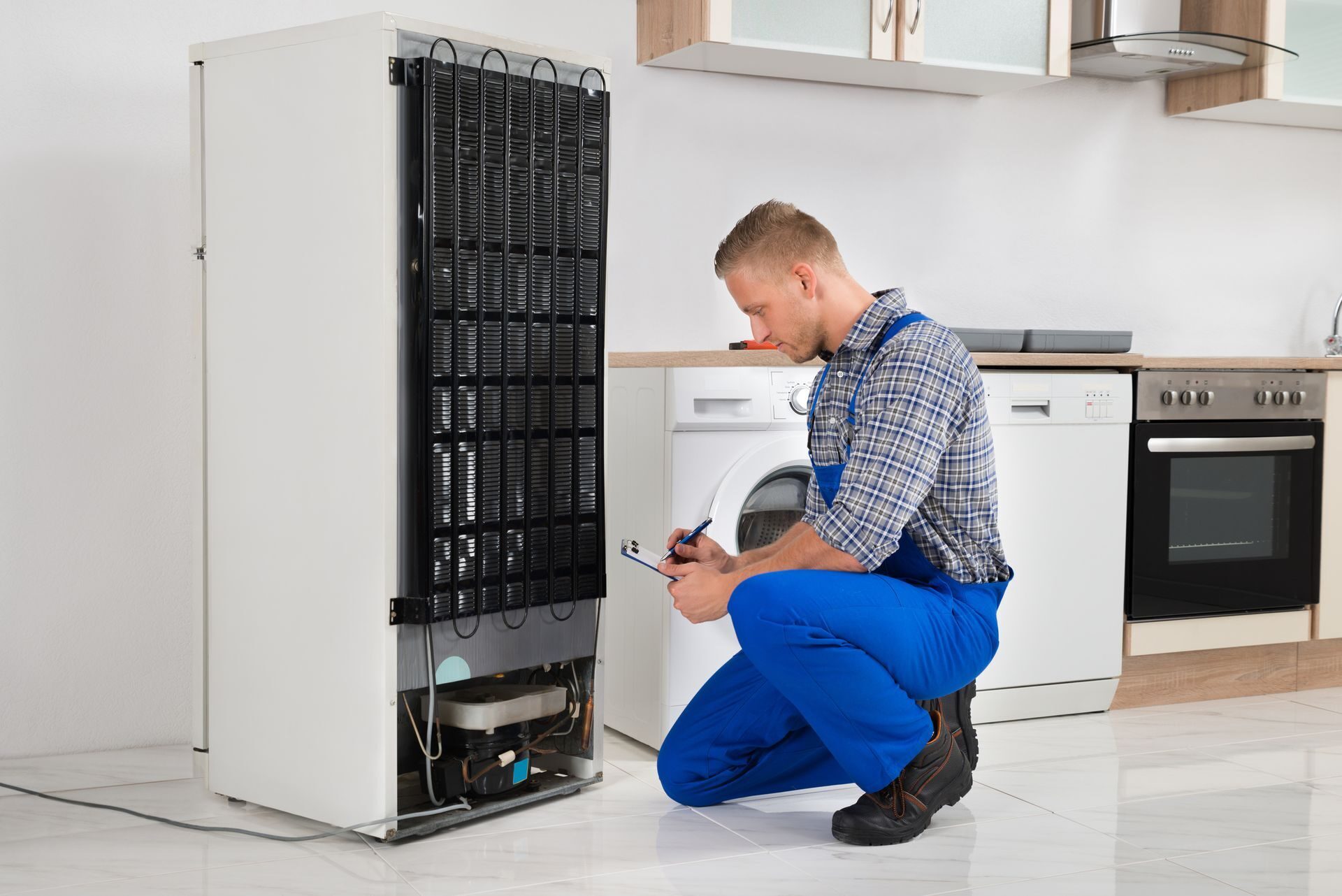
Sometimes a refrigerator stops cooling because the compressor never actually starts. One common culprit is the compressor start relay or overload protector. These inexpensive electrical components help the compressor start each cooling cycle. If either one fails, the compressor may click repeatedly without turning on.
Typical symptoms include:
- Refrigerator not cooling at all
- Repetitive clicking every few minutes
- Interior light works normally
- Compressor feels warm but never runs
- No cold air in either compartment
Because the relay is much less expensive than a compressor, replacing this small part can often restore normal operation and prevent a much larger repair. A technician can quickly determine whether the relay has failed or whether the compressor itself has developed a more serious problem.
Door Seal Gasket Failure Letting Cold Air Escape

Perform the Dollar Bill Test
A refrigerator door gasket creates an airtight seal that keeps cold air inside. Over time, the rubber gasket can become cracked, warped, or loose, allowing warm air to enter continuously.
Common signs include:
- Moisture around the door
- Frost buildup inside the freezer
- Compressor running almost constantly
- Refrigerator struggling to maintain temperature
A simple way to check the seal is the dollar bill test. Close the refrigerator door on a dollar bill and gently pull it. You should feel resistance. If the bill slides out easily in several places around the door, the gasket may no longer seal properly.
Sometimes the gasket simply needs cleaning or adjustment. In other cases, replacing the seal can significantly improve cooling performance and reduce energy consumption.
Thermistor Temperature Sensor Drift
Common in Modern Digital Refrigerators
Most newer refrigerators rely on thermistors to monitor internal temperatures. These sensors send temperature readings to the electronic control board, which decides when to start and stop the cooling system.
As thermistors age, they may begin sending inaccurate readings. The refrigerator may mistakenly believe it has reached the correct temperature even when the interior is becoming warm.
Possible symptoms include:
- Inconsistent temperatures
- Food freezing on some shelves but spoiling on others
- Cooling that turns on and off unpredictably
- Error codes on digital displays
Diagnosing a faulty thermistor typically requires electrical testing with a multimeter and comparison to manufacturer specifications, making professional diagnosis the safest option.
Compressor Failure and When Replacement Makes Sense
Repair or Replace?
The compressor is the heart of every refrigerator. It circulates refrigerant throughout the sealed cooling system. Although compressors are built to last many years, they eventually wear out.
Signs of compressor failure may include:
- Refrigerator completely stops cooling
- Loud humming followed by clicking
- Compressor extremely hot to the touch
- Circuit breaker trips repeatedly
- Compressor fails electrical testing
A failed compressor doesn’t always mean replacing the entire refrigerator, but age becomes an important factor.
In many situations:
- Refrigerators under about 8–10 years old are often good candidates for repair, especially if they are otherwise in good condition.
- Older refrigerators with multiple major issues may make replacement the more practical long-term investment.
A technician can evaluate the overall condition of the appliance and help you determine which option makes the most financial sense.
If you’re also experiencing issues such as a refrigerator that’s cold in the freezer but warm in the fresh food compartment, you may also find helpful information in [INTERNAL LINK: Refrigerator Warm but Freezer Works → Related Blog Article].
When Should You Call a Refrigerator Repair Professional?
While cleaning condenser coils or checking the door gasket are reasonable DIY tasks, many cooling problems involve electrical components, sealed refrigerant systems, or electronic controls that require specialized tools.
Consider scheduling a professional inspection if:
- The refrigerator has completely stopped cooling.
- Food is spoiling despite temperature adjustments.
- You hear repeated clicking or unusual compressor noises.
- Frost returns shortly after manual defrosting.
- Water leaks continue after cleaning.
- The refrigerator repeatedly trips the circuit breaker.
- Basic troubleshooting has not restored cooling.
At Serenity Appliance Repair, technicians diagnose refrigerators from most major household brands and provide same-day service whenever possible throughout Wesley Chapel and nearby communities.
For additional appliance services, visit [INTERNAL LINK: Appliance Repair Services → Main Services Page] or explore [INTERNAL LINK: Samsung Appliance Repair → Brand Service Page] if you own a Samsung refrigerator.
Frequently Asked Questions
What is the most common reason a refrigerator stops cooling?
Dirty condenser coils, failed evaporator fans, and defrost system problems are among the most common causes. The exact issue depends on the refrigerator’s design and symptoms.
How can I tell if my refrigerator compressor is bad?
Repeated clicking, overheating, failure to cool both compartments, or a compressor that never starts may indicate compressor problems. A technician can confirm this with electrical testing.
Can I fix a refrigerator that’s not cooling myself?
You can safely clean condenser coils, inspect the door gasket, and verify temperature settings. Problems involving electrical components, sealed refrigerant systems, or compressors should be handled by a qualified technician.
How long do refrigerator compressors typically last?
Many compressors operate for 10 to 15 years or longer with proper maintenance, although actual lifespan depends on usage, maintenance, and the specific model.
Should I repair or replace a refrigerator that stopped cooling?
If the refrigerator is relatively new and otherwise in good condition, repairing it is often worthwhile. Older appliances with major component failures may be better candidates for replacement.
Where can I get this refrigerator problem fixed today in Wesley Chapel, FL?
Serenity Appliance Repair provides refrigerator diagnostics and repair services for homeowners throughout Wesley Chapel, FL, servicing a wide range of major appliance brands.
How long does it usually take to fix a refrigerator with this issue?
Many common refrigerator repairs can be completed during the initial service visit once the faulty component has been identified and the necessary parts are available.
Will fixing this myself void my refrigerator manufacturer’s warranty?
Some manufacturer warranties require repairs to be performed by authorized service providers. Always review your warranty documentation before attempting repairs beyond basic maintenance.
What questions should I ask before hiring a refrigerator repair technician?
Ask whether the company services your appliance brand, offers warranty coverage on repairs, provides written estimates after diagnosis, and explains the recommended repair before work begins.
How can I prevent my refrigerator from developing cooling problems again?
Cleaning condenser coils regularly, keeping door gaskets clean, avoiding overloaded shelves, maintaining proper airflow, and scheduling repairs when early warning signs appear can help extend your refrigerator’s lifespan.
Need Help With a Refrigerator That Isn’t Cooling?
If your refrigerator is no longer keeping food cold and basic troubleshooting hasn’t solved the problem, don’t wait for groceries to spoil or minor issues to become major repairs.
The team at Serenity Appliance Repair provides refrigerator diagnostics and repair services for homeowners throughout Wesley Chapel, FL. Whether the issue involves airflow, electrical components, temperature sensors, or compressor-related problems, an accurate diagnosis is the first step toward getting your kitchen back to normal.
Contact Serenity Appliance Repair to schedule a refrigerator inspection or learn more about our [INTERNAL LINK: Refrigerator Repair Service → Refrigerator Service Page].
Conclusion
A refrigerator that isn’t cooling doesn’t always mean the appliance has reached the end of its life. In many cases, the problem can be traced to a specific component such as dirty condenser coils, a failed evaporator fan, a faulty temperature sensor, or a worn door gasket. Identifying the symptoms early can help prevent food loss and avoid more extensive damage.
By understanding the most common causes of refrigerator cooling problems and knowing when professional service is the safest option, homeowners can make informed repair decisions. If your refrigerator continues to struggle after basic troubleshooting, scheduling a professional diagnosis can help restore reliable cooling and extend the life of your appliance.
