


There’s nothing quite as frustrating as sliding a dish into the oven, setting the temperature, and coming back to find it hasn’t cooked at all. If you’re in the middle of oven not heating troubleshooting, the good news is that most causes are fairly predictable: a tripped circuit breaker, a damaged heating element, a faulty temperature sensor, a broken igniter in gas models, or worn electrical connections.
Start with the simplest possibilities first. Check the power supply, then take a close look at the heating element for cracks or blistering. If the oven still won’t heat after these basic checks, it’s a good sign the issue runs deeper — and that’s when a certified appliance repair technician can diagnose the problem accurately and often complete the repair the same day.
What Should You Check Before Troubleshooting Your Oven?
Before assuming a costly part has failed, run through a few quick checks. They take only a couple of minutes and rule out the easiest — and cheapest — fixes first:
- Confirm the circuit breaker for the oven hasn’t tripped.
- Make sure the unit is receiving steady power at the outlet.
- Double-check that the correct mode and temperature are actually set.
If everything checks out and the oven is still cold, it’s time to look a little deeper.
Should Homeowners Try DIY Fixes Before Calling a Technician?
Basic oven not heating troubleshooting steps, like checking the breaker or confirming power, are safe for most homeowners to attempt alone. Beyond that point, deeper diagnostic work is best left to trained hands. Serenity Appliance Repair’s technicians bring years of hands-on experience with household ovens, so whatever the actual cause turns out to be, you can count on it being found and fixed correctly the first time.
Does the Oven Brand Affect Who Can Repair It?
Brand rarely limits your repair options. Serenity Appliance Repair services more than 90 appliance brands, so homeowners with any oven make or model can find qualified help without contacting multiple repair companies or waiting on a brand-specific specialist.

How Do You Diagnose an Oven That Won’t Heat?
Proper oven not heating troubleshooting starts with a visual check of the heating elements before any parts get replaced. Cracks, blistering, or visible breaks on the element usually point straight to the culprit. A trained technician spots these flaws quickly during an inspection, which is why diagnosis — and often the repair itself — can happen in a single visit.
What Usually Causes an Oven to Stop Heating?
The likely cause depends on what kind of oven you have:
- Electric ovens typically lose heat because of a broken heating element.
- Gas ovens often fail due to a faulty igniter.
Both parts drive the oven’s ability to generate heat, so a failure in either one stops the baking process even while other functions — the display, the stovetop, the interior light — keep working normally.
Diagnosis follows a clear sequence:
- Inspect the heating element for visible damage.
- Check the igniter on gas models for a weak or absent glow.
- Confirm other oven functions still operate normally.
- Call a professional once the faulty part is identified.
Once the diagnosis is confirmed, homeowners can count on same-day repair service built around quality that meets expectations — no drawn-out wait for a part that could have been fixed that afternoon.

When Should You Call a Professional Repair Technician?
Professional help becomes necessary once basic checks fail to restore heat. Power supply, circuit breakers, and visible element damage are the first line of defense in oven not heating troubleshooting — but persistent problems signal something deeper. At that point, continued guesswork risks damaging other components and costs more time than it saves.
What If the Oven Still Won’t Heat After Basic Troubleshooting?
Stop testing individual parts once the safe, surface-level checks are exhausted. A qualified technician diagnoses hidden issues, like faulty sensors or igniter failures, far more accurately — and far faster — than repeated DIY attempts.
How Can Homeowners Reach a Repair Technician Quickly?
Serenity Appliance Repair offers two straightforward options for immediate assistance:
- Call the company directly by phone.
- Book service online for scheduling convenience.
Every visit reflects a commitment to fairness, professionalism, and ethical service. Customer satisfaction stays central to each repair, giving households confidence that their oven receives proper, lasting attention rather than a quick patch.
Ready for a Same-Day Fix?

If your oven still isn’t heating after these checks, don’t let a cold oven throw off your whole week. Serenity Appliance Repair’s certified technicians diagnose the issue fast and often complete the repair during the very same visit — call us directly or book service online to get your kitchen back on track.
Frequently Asked Questions
Why is my electric oven not heating up?
In most cases, an electric oven that won’t heat has a broken or burned-out heating element. You can often see this yourself: look for cracks, blistering, or a visible break in the coil. If the element looks fine, a faulty temperature sensor or a tripped breaker could also be the cause, so it’s worth checking those first before assuming a part needs replacing.
Why is my gas oven not heating properly?
Gas oven heating issues usually trace back to a faulty igniter that isn’t glowing strong enough to ignite the gas. Other possibilities include a blocked gas supply or an issue with the safety valve. Because gas components carry added safety considerations, it’s best to have a certified technician confirm the diagnosis before attempting a fix.
How much does oven heating element replacement typically involve?
Oven heating element replacement is usually a quick, straightforward repair once the faulty element is confirmed. A qualified technician can often complete the swap during the same visit, getting your oven back to full baking temperature without a long wait for follow-up appointments.
Can I troubleshoot a faulty oven igniter myself?
You can safely check for a weak or absent glow on a gas igniter, but replacing it involves working near the gas line, which is best left to a trained technician. This keeps the repair safe and ensures the new igniter is installed and tested correctly.
When should I stop troubleshooting and call a professional?
Once you’ve confirmed the power supply, checked the breaker, and visually inspected the heating element or igniter without finding an obvious fix, it’s time to call in a professional. Continuing to test parts on your own risks further damage and delays getting your oven back in working order.
Conclusion
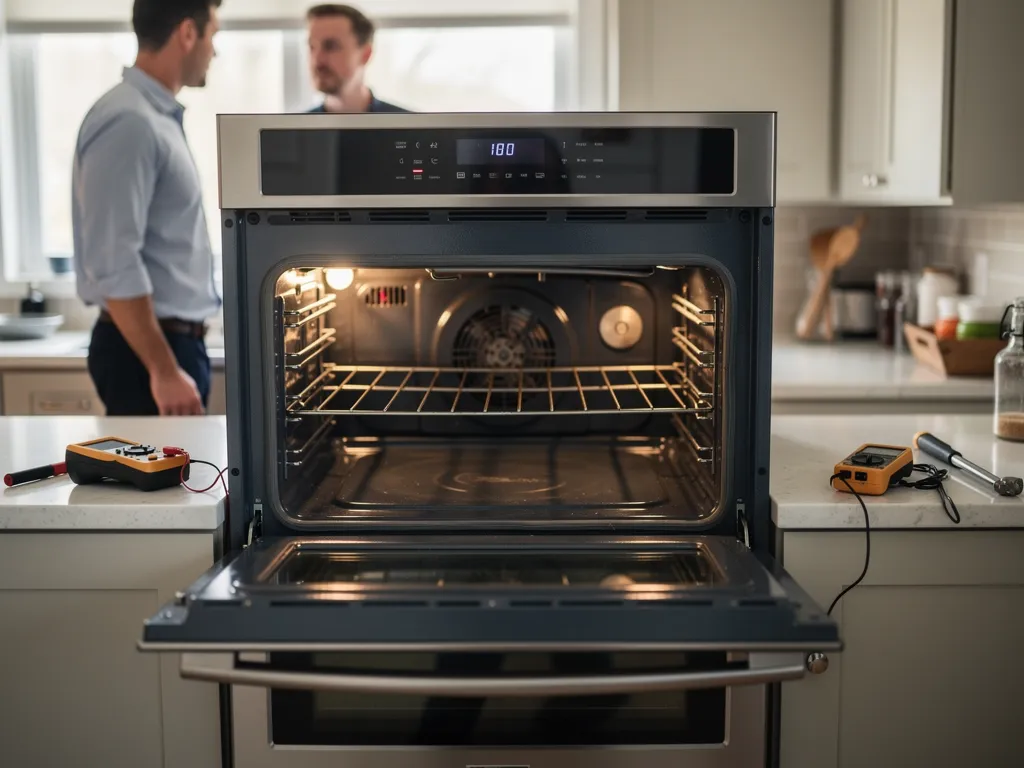
Addressing an oven that fails to heat comes down to systematic diagnosis: check the power supply, inspect the heating element or igniter, and confirm every other function still works before assuming the worst. Working through these steps methodically helps you identify the root cause and decide whether a DIY fix is realistic or whether it’s time to bring in a professional. Most heating failures come from predictable, well-understood component issues that a qualified technician resolves efficiently — often in a single visit. Taking action promptly prevents further damage and gets your oven back to reliable, everyday use.
Conclusion
In closing, a properly functioning oven relies on several interdependent components, and systematic troubleshooting brings clarity to what otherwise feels like a frustrating malfunction. While checking power sources, resetting controls, and inspecting heating elements resolves many issues, some problems require the trained eye of a qualified technician. Attempting repairs beyond one’s expertise risks further damage or safety hazards. When troubleshooting efforts fall short, entrusting the diagnosis to certified professionals ensures the appliance is restored safely, efficiently, and with lasting reliability.
