

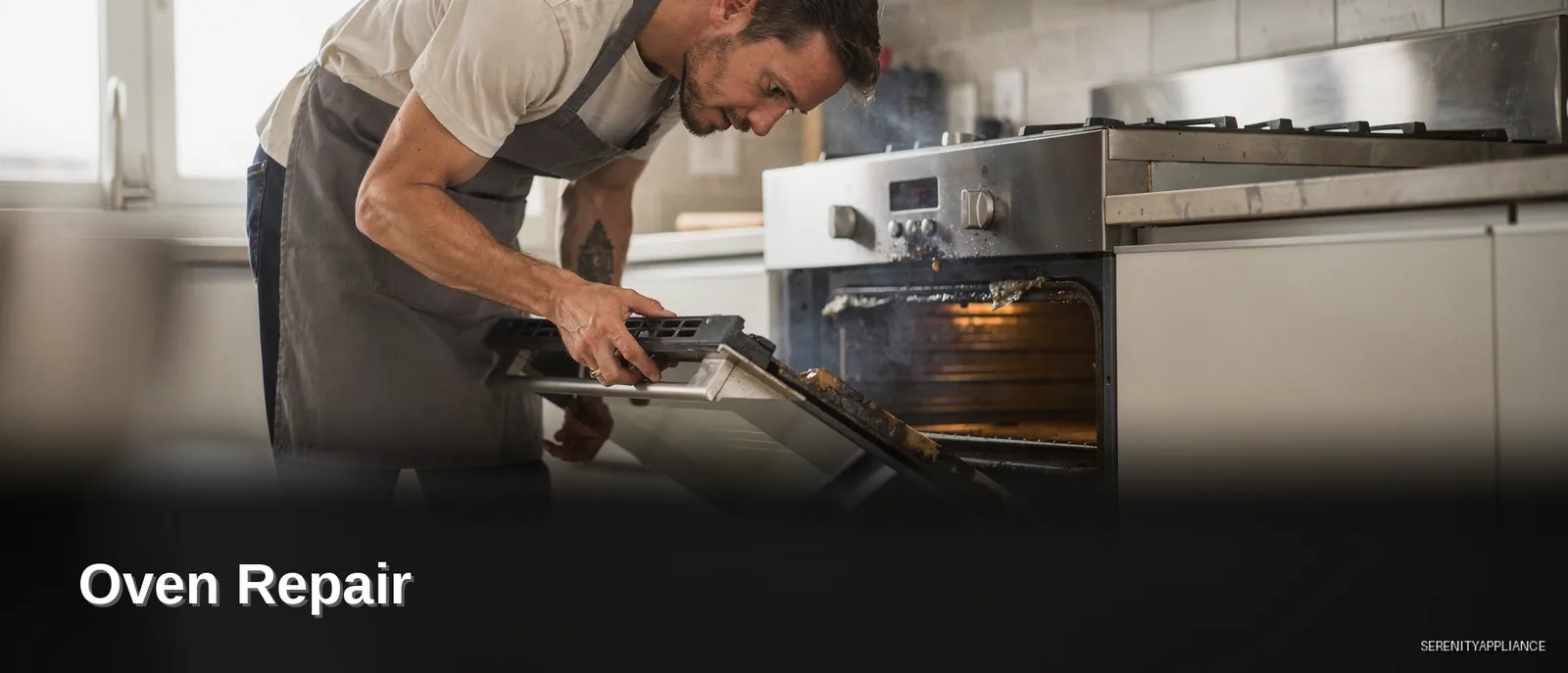
When an oven stops heating evenly, refuses to turn on, or suddenly starts showing error codes, homeowners usually face the same question: repair it, troubleshoot it, or replace it?
In 2026, most oven problems still fall into three practical categories. Minor issues may be safe to check at home. More serious electrical, gas, or heating failures require a trained technician. And when repair costs begin approaching the price of a replacement appliance, replacement may make more sense.
For homeowners who want to avoid guesswork, Serenity Appliance Repair offers same-day appliance repair services for ovens and other major household appliances. Experienced technicians diagnose problems in the home, work across a wide range of brands, and help owners determine whether repair or replacement is the more practical option.
What Warning Signs Signal Oven Trouble?
Ovens rarely fail without warning.
In many cases, the appliance begins showing small signs of trouble days or weeks before it stops working completely.
Common warning signs include:
- Uneven baking
- Oven not reaching the selected temperature
- Food taking much longer to cook
- Gas pilot light not staying lit
- Burner or heating element not working
- Control panel not responding
- Error codes on the display
- Oven shutting off unexpectedly
- Unusual smells
- Clicking or buzzing noises
These symptoms should not be ignored.
A weak igniter, failing heating element, worn thermostat, or damaged sensor may start as a small performance issue and eventually lead to a complete breakdown.
Why Uneven Heating Is a Common Oven Problem
One of the most common complaints homeowners notice first is uneven cooking.
If one side of a dish burns while the other remains undercooked, the problem may involve:
- A failing bake element
- A damaged broil element
- Temperature sensor problems
- Thermostat calibration
- Convection fan issues
- Poor air circulation
Before assuming the entire oven needs replacement, a technician can test the individual components responsible for temperature control.
In many cases, replacing a single faulty part restores normal cooking performance.
 Should Homeowners Try DIY Oven Repairs First?
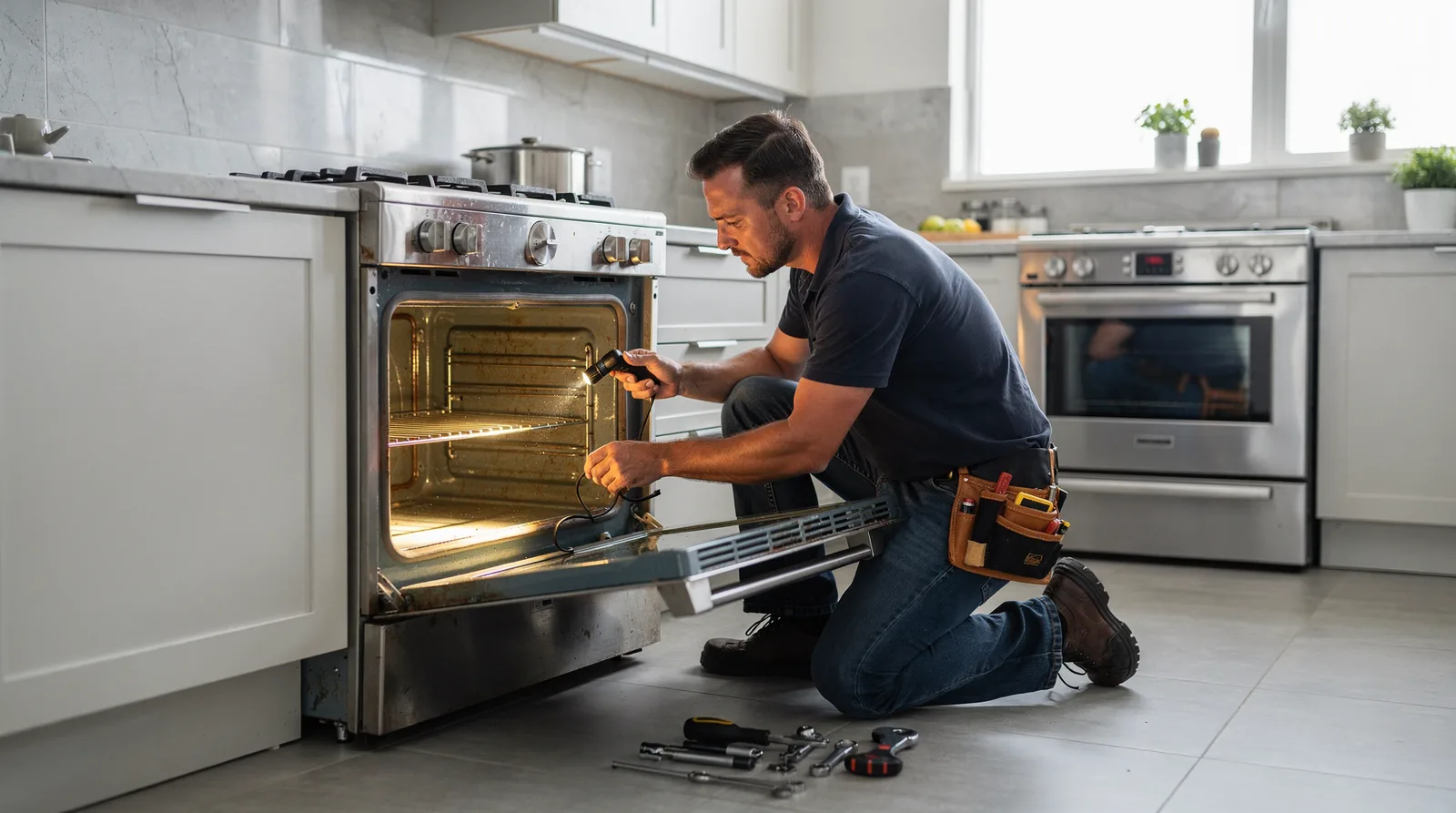 Should Homeowners Try DIY Oven Repairs First?
Some basic troubleshooting is reasonable.
Before scheduling service, homeowners can safely check a few simple things.
Try:
- Confirming the oven has power
- Checking the circuit breaker
- Making sure settings are correct
- Inspecting the door for obvious obstruction
- Cleaning visible surface debris
- Restarting the appliance if the manufacturer recommends it
These steps may resolve a simple power or control issue.
However, stop troubleshooting if the repair involves:
- Gas lines
- Internal wiring
- Heating elements
- Control boards
- Igniters
- High-voltage electrical components
These systems can create serious safety risks if handled incorrectly.
When DIY Troubleshooting Becomes Unsafe
Modern ovens combine electrical circuits, heat-producing components, sensors, and in some models, natural gas.
That means a repair that looks simple from the outside may involve potentially dangerous components behind the control panel.
Professional service is recommended if you notice:
- Gas odor
- Sparking
- Burned wiring
- Repeated breaker trips
- Electrical shocks
- A heating element glowing abnormally
- A control panel that becomes hot
Do not continue operating an oven that appears unsafe.
What Happens During a Same-Day Oven Repair Visit?
Same-day service is designed to shorten the period homeowners have to live without a functioning kitchen appliance.
A technician typically begins by discussing the symptoms and then inspecting the oven directly.
The diagnostic process may include checking:
- Power supply
- Heating elements
- Temperature sensors
- Igniters
- Thermostat function
- Control boards
- Door switches
- Wiring
- Convection fans
Once the cause is identified, the technician can explain the recommended repair and whether the necessary part is available.
When the required component is stocked, many common repairs can be completed during the same appointment.
Why Diagnosis Matters More Than Guessing
Replacing the wrong part wastes both time and money.
For example, an oven that does not heat may have:
- A failed element
- A bad igniter
- A faulty relay
- A control board issue
- A damaged sensor
The visible symptom can be identical even though the cause is completely different.
Professional diagnostics help identify the actual failure rather than relying on trial and error.
Common Oven Repairs Technicians Handle
Professional appliance technicians regularly diagnose and repair problems such as:
Oven Not Heating
Potential causes include:
- Failed bake element
- Igniter problems
- Temperature sensor failure
- Control board faults
- Electrical supply issues
Oven Overheating
An oven that runs too hot may have:
- Faulty temperature sensor
- Thermostat problems
- Control board issues
Oven Door Not Closing Properly
Door problems may involve:
- Worn hinges
- Damaged gasket
- Broken latch
- Misalignment
A poor door seal can also cause heat loss and inconsistent cooking.
Control Panel Not Working
A non-responsive control panel may point to:
- Electrical issues
- Failed control board
- User interface problems
- Loose connections
Convection Fan Not Running
Convection ovens depend on proper airflow.
A failed fan may cause uneven cooking even when heating elements still work.
Should You Repair or Replace Your Oven?
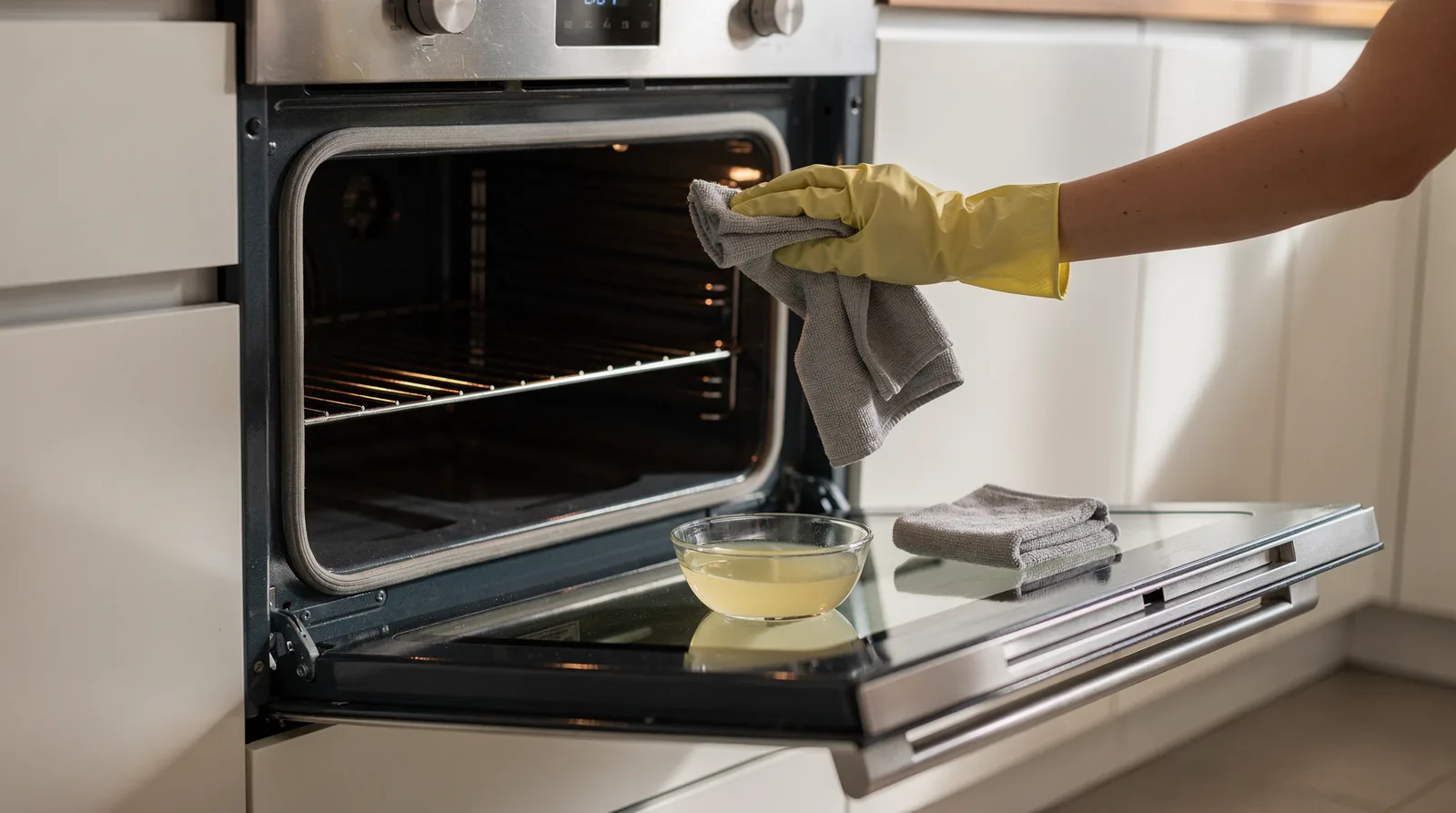 Should You Repair or Replace Your Oven?
This is one of the most important decisions homeowners face after diagnosis.
Repair often makes sense when:
- The oven is otherwise in good condition
- The problem involves one replaceable component
- The repair cost is reasonable
- The appliance has been reliable
- Replacement would cost significantly more
Replacement may make more sense when:
- The oven is very old
- Several major components are failing
- Repairs have become frequent
- Parts are difficult to source
- Repair costs approach roughly half the price of a comparable new appliance
The final decision depends on the appliance’s age, condition, repair history, and replacement cost.
A professional technician can help homeowners compare these factors without automatically pushing toward one option.
Is Repair Usually Cheaper Than Replacement?
Often, yes.
Many oven failures involve individual components rather than complete system failure.
Replacing:
- An igniter
- Heating element
- Sensor
- Switch
- Gasket
is usually much less expensive than replacing the entire appliance.
This is especially true for higher-end ovens or built-in units, where replacement may also involve installation work.
When Replacement Becomes the Better Choice
There is a point where repeated repairs stop making financial sense.
If the oven has required multiple service calls over a short period or if several major systems are deteriorating at once, replacement may offer better long-term value.
A technician can help identify whether the current repair is isolated or part of a broader pattern of failure.
Why Multi-Brand Experience Matters
Homeowners and property managers rarely have every appliance from the same manufacturer.
A kitchen may include one brand of oven, another refrigerator, and a third dishwasher.
Working with a repair provider that services many brands makes scheduling much easier.
Serenity Appliance Repair works across a broad range of appliance manufacturers, which helps customers avoid coordinating separate specialists for every appliance.
You can review the company’s full appliance repair services to learn more about supported appliance types.
Oven Repair for Property Managers
Property managers often need repairs completed quickly because a broken oven affects tenant satisfaction and daily living.
Multi-brand experience is especially valuable in rental properties where units may contain different appliance models.
One repair provider can simplify:
- Scheduling
- Communication
- Service records
- Follow-up repairs
- Warranty coordination
Fast in-home service also reduces the amount of time tenants are left without a working kitchen appliance.
How Regular Maintenance Can Extend Oven Life
Preventive maintenance helps catch small problems before they become major failures.
Regular oven care can include:
- Inspecting the door gasket
- Checking heating performance
- Cleaning spills and grease buildup
- Testing temperature accuracy
- Watching for unusual noises
- Keeping vents unobstructed
Consistent maintenance supports more even cooking and reduces unnecessary strain on internal components.
How Often Should an Oven Be Maintained?
There is no single schedule that fits every appliance.
Frequency depends on how often the oven is used and how old it is.
Homeowners who cook daily should pay closer attention to changes in heating performance than households that use the oven occasionally.
Professional inspection may be worthwhile when:
- The oven is several years old
- Heating becomes inconsistent
- The door no longer seals tightly
- Error codes begin appearing
- The appliance has required previous repairs
Should You Use the Self-Cleaning Cycle?
Self-cleaning can be useful, but it also exposes the oven to very high temperatures.
Follow the appliance manufacturer’s instructions carefully.
If the oven already has electrical, sensor, or door-lock problems, avoid running a self-cleaning cycle until the appliance has been inspected.
For routine care, many homeowners can reduce heavy buildup by wiping spills after the oven cools.
Why Door Gasket Maintenance Matters
The door gasket helps keep heat inside the oven.
A worn or damaged seal may cause:
- Longer cooking times
- Uneven temperatures
- Increased energy use
- Heat escaping around the door
Inspect the gasket periodically for tears, gaps, or sections pulling away from the door.
If the seal is damaged, replacement is usually much more practical than continuing to operate the oven inefficiently.
How to Prevent Common Oven Breakdowns
Simple habits can reduce unnecessary strain on the appliance.
Homeowners can:
- Clean spills regularly
- Avoid slamming the oven door
- Keep vents unobstructed
- Watch for temperature changes
- Address error codes early
- Inspect door seals
- Schedule service when unusual smells or sounds appear
Waiting until the oven stops working completely usually creates more inconvenience than addressing symptoms early.
Why Professional Follow-Through Matters
Good repair service does not end when the technician replaces a part.
A reputable provider should test the oven after repair and confirm that the problem has actually been resolved.
Professional service should include:
- Clear diagnosis
- Repair explanation
- Testing after service
- Honest communication
- Follow-up if a problem returns
This approach is particularly important when homeowners rely on the oven every day.
How to Schedule Oven Repair
Homeowners can usually request service in several ways.
Options may include:
- Calling the repair company directly
- Booking online
- Requesting same-day service
- Scheduling a future appointment
Serenity Appliance Repair offers convenient booking for oven repair as well as service for refrigerators, washers, dryers, dishwashers, and other major household appliances.
You can also visit the contact page to request an appointment or review available service locations.
Need Oven Repair or Maintenance?
If your oven is heating unevenly, refusing to start, showing error codes, or taking significantly longer to cook, early diagnosis can help prevent a complete breakdown.
Serenity Appliance Repair provides professional in-home oven repair and maintenance across a broad range of appliance brands.
A technician can inspect the appliance, explain whether repair makes sense, and help you decide when replacement would be the better option.
Frequently Asked Questions
What are the most common signs an oven needs repair?
Uneven heating, failure to reach temperature, error codes, non-responsive controls, unusual smells, and heating elements that stop working are common warning signs.
Can I repair an oven myself?
Simple checks such as confirming power or checking the breaker may be safe. Repairs involving gas lines, wiring, control boards, heating elements, or igniters should be handled by a professional.
How do I know if I should repair or replace my oven?
Repair usually makes sense when the problem is isolated and the appliance is otherwise in good condition. Replacement may be better when repair costs become high relative to the price of a new unit or when several components are failing.
How long does an oven repair appointment take?
Appointment length depends on the problem and whether replacement parts are available. Many common repairs can be diagnosed and completed during the same visit.
Can one technician repair different oven brands?
Experienced appliance repair companies often service a broad range of major brands and oven types, making it easier for homeowners and property managers to use one provider.
How often should an oven be maintained?
There is no universal schedule. Regular cleaning, gasket inspection, and attention to changes in heating performance can help identify problems early.
Does Serenity Appliance Repair offer same-day oven repair?
Same-day availability may be offered depending on location, schedule, and the time the service request is submitted.
Can the same company repair my other kitchen appliances?
Yes. Serenity Appliance Repair also services other major appliances, including refrigerators, dishwashers, washers, dryers, and more.
Conclusion
Oven problems do not automatically mean the appliance needs to be replaced.
In many cases, a failed heating element, sensor, igniter, gasket, or control component can be repaired for far less than the cost of a new oven.
The smartest approach is to identify problems early, avoid unsafe DIY work, and use professional diagnostics when the cause is unclear.
Routine maintenance, attention to warning signs, and timely repairs can help extend the appliance’s useful life while reducing unexpected kitchen disruptions.
Serenity Appliance Repair provides in-home oven repair and maintenance across a broad range of brands, helping homeowners choose the most practical path between troubleshooting, professional repair, and replacement.
